
The Archive’s Political Voice
Poor ThingsThis flow traces how editorial framing and historical notes turn the novel’s fictional documents into a debate about authority and evidence.
increasing Bearing strength in each event
 decreasing
Bearing strength in each eventdecreasingDonnelly’s Discovery

Donnelly’s Discovery
Salvage from demolition
Michael Donnelly works to preserve material threatened by redevelopment and finds an old book among discarded legal papers. Its title and surviving letter promise a hidden history.
History as recovery
The discovery links individual lives to the city’s material past. Yet the circumstances of the find are uncertain, so preservation does not automatically establish truth.
The Editor Claims Authority

The Editor Claims Authority
A declared method
Gray says he preserves McCandless’s text while changing its title and chapter headings. He also presents a researched chronology meant to persuade readers that the events are historical.
Doubt built into the claim
The editor refuses to provide all the documentary proof requested by Donnelly. His assurance becomes part of the book’s fiction-making rather than a neutral guarantee.
Notes as Performance
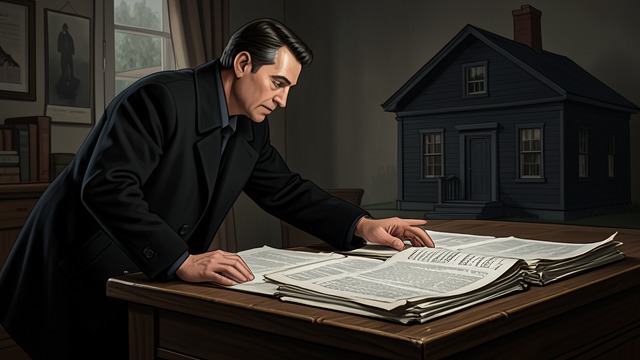
Notes as Performance
Scholarship imitated
The notes provide place histories, biographies, and explanations of local details. Their authoritative style makes the reader consider how scholarship constructs credibility.
Facts made unstable
The notes also contain inventions and deliberate absurdities. They do not merely clarify the narrative; they show how factual form can be used to support incompatible stories.
The Letter Changes the Story
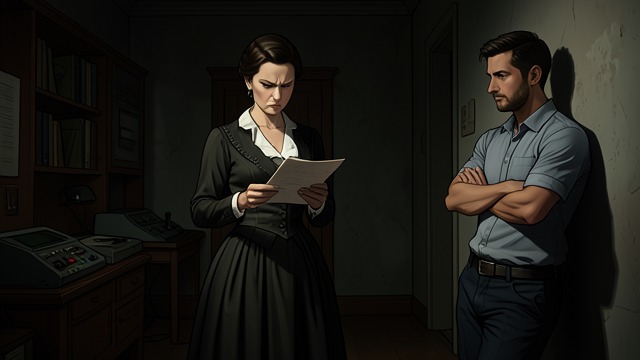
The Letter Changes the Story
A witness challenges the memoir
Victoria’s letter rejects the account of her creation and early relationship with McCandless. She describes the memoir as a wishful reordering of events.
Personal testimony is not final proof
Her voice corrects the reader’s assumptions but is also a retrospective account. The novel leaves its audience to weigh conflicting testimony instead of offering a single authoritative version.
A Reader’s Unsettled Verdict
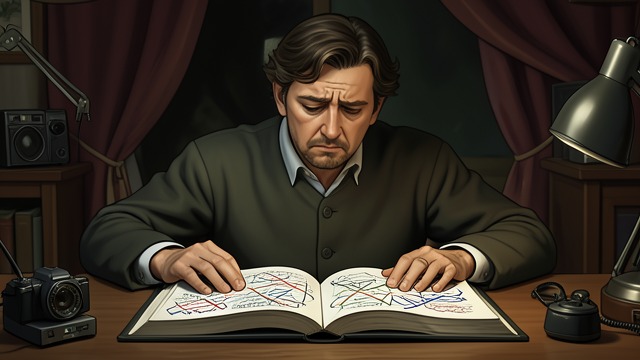
A Reader’s Unsettled Verdict
The book refuses closure
The memoir, letter, editorial introduction, and notes tell overlapping but incompatible histories. Each tries to explain what Bella was and who had the right to describe her.
Interpretation becomes participation
Readers must decide what kinds of evidence they trust and why. The novel’s structure makes uncertainty a critical tool for examining power, memory, and the authority of narrative.
The 1970s, in Glasgow
1990, when Gray prepares the edition
After the central narrative, in the historical notes
At the end of McCandless’s memoir
After the final notes and images
